10 November 2026
Echoes from the Money Market
A changing monetary landscape
Rising interest rates, renewed inflationary pressures and declining excess liquidity shaped euro money markets in September, prompting adjustments across several market segments.
September brought a new wave of adjustments to euro money markets. Against a backdrop of geopolitical tensions and rising energy prices, the European Central Bank (ECB) raised its key interest rates by 25 basis points, bringing the deposit facility rate to 2.50%.
With euro area headline inflation reaching 3.2%, market expectations shifted towards further monetary tightening. By the end of September, markets were pricing in two additional rate increases between December 2026 and early 2027.
The impact on money markets
These expectations were reflected in the Euribor curve, which steepened significantly. On 28 September, three-month Euribor stood at 2.59%, compared with 3.36% for the twelve-month tenor.
Transaction volumes underlying Euribor also increased, reaching €178 billion in September, up €19 billion from August.
The overnight index swap (OIS) market experienced a similar adjustment. Trading volumes rose as participants responded to changing interest rate expectations, with spot OIS activity reaching its highest level in five years.
Liquidity continues to decline
Meanwhile, the gradual normalisation of the Eurosystem's balance sheet continued. Excess liquidity declined to €2.12 trillion by 28 September.
Although this reduction remained orderly, repo rates have displayed greater volatility since August, illustrating the changing conditions in secured money markets.
Secured transactions continued to dominate wholesale money market activity, while Euribor closely tracked ECB policy rates.
STEP remains part of the picture
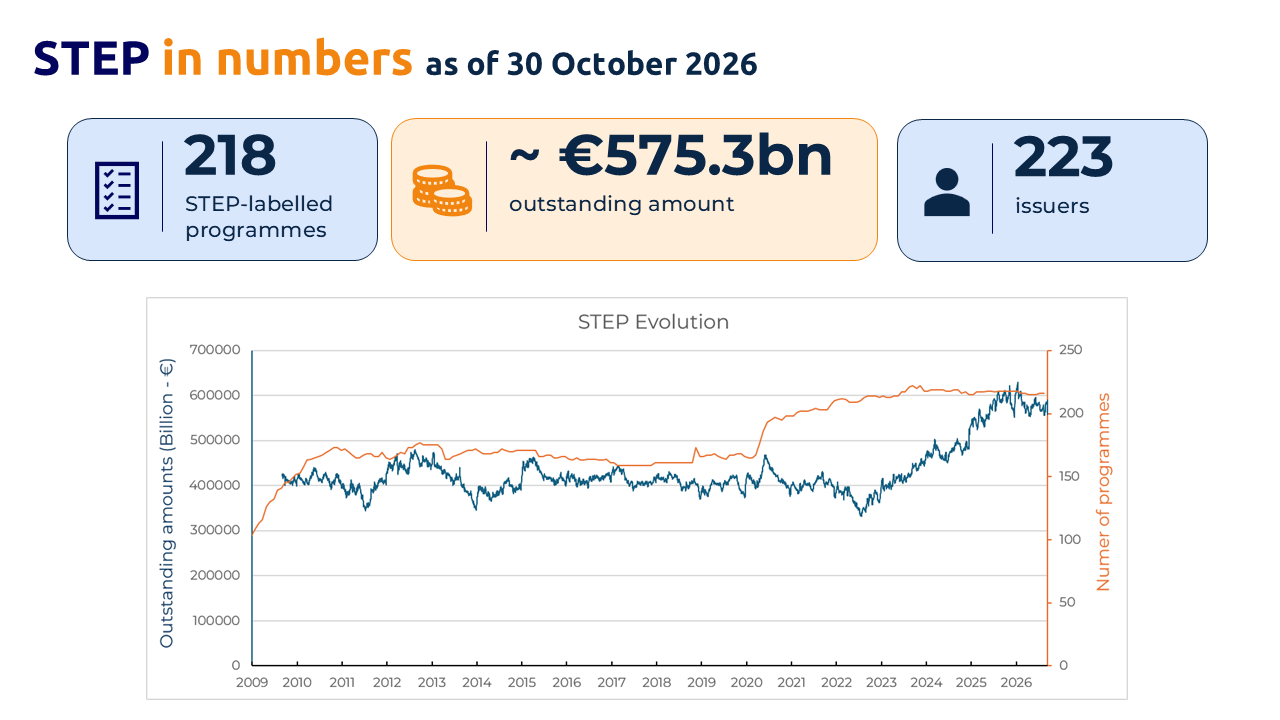
In the commercial paper market, outstanding STEP-labelled securities stood at €575 billion on 30 October, with monetary financial institutions accounting for the largest share.
STEP continues to represent a significant segment of European short-term funding.
October's developments highlight a market adjusting to higher interest rates, evolving expectations and gradually declining liquidity. As these dynamics continue to unfold, their interaction will remain central to developments across European money markets.